

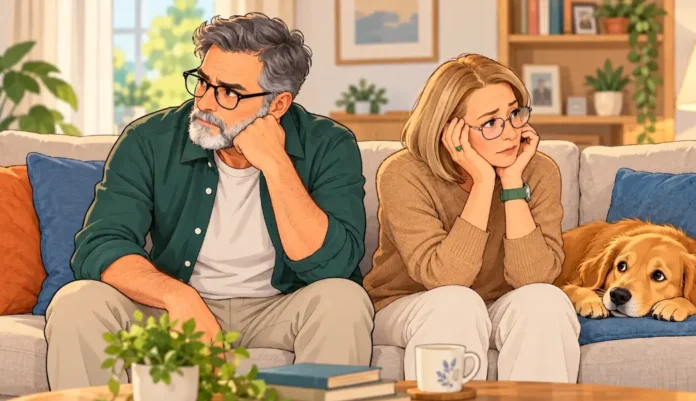

Why Couples Drift Apart After Age 50?
WomanlyZine.com
Couples may drift apart after 50 because retirement, an empty nest, health changes, financial stress, and years of unresolved conflict can reduce emotional connection. Rebuilding closeness starts with honest communication, shared experiences, affection, individual interests, and addressing relationship or health issues that create distance.
Why do couples drift apart after 50? Couples often become emotionally distant after 50 not because they suddenly stop loving each other, but because the structure of their lives changes. Retirement, adult children leaving home, caregiving responsibilities, health changes, financial concerns, reduced social networks, and years of unresolved disagreements can expose problems that were previously hidden by work and family responsibilities.
The good news is that emotional distance does not automatically mean a relationship is over. For many couples, the years after 50 can become an opportunity to build a different kind of relationship—one based less on raising children or managing a household and more on companionship, emotional connection, shared meaning, affection, and intentional time together.
Table of Contents
What does “drifting apart” mean in a long-term relationship?
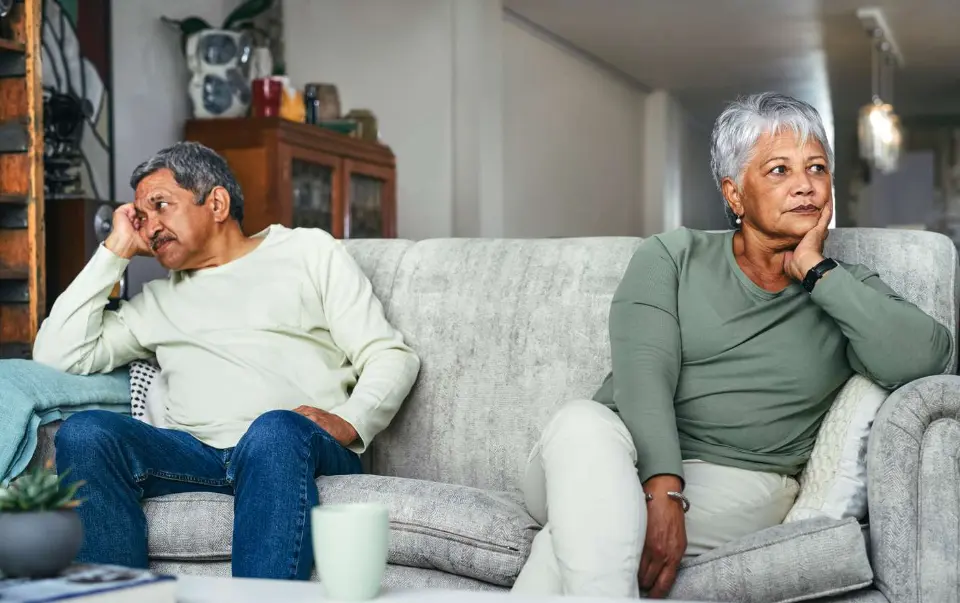
Drifting apart usually refers to a gradual reduction in emotional connection, communication, shared activities, affection, or curiosity about one another.
It is different from having an occasional disagreement.
A couple may still:
- Live in the same home
- Share finances
- Attend family events together
- Take care of household responsibilities
- Talk about schedules and practical matters
Yet they may rarely discuss what they feel, want, fear, or hope for.
This creates an important distinction between living together and feeling connected.
Research and public-health guidance also distinguish loneliness from social isolation. A person can be surrounded by people and still feel lonely if meaningful emotional connection is missing.
That distinction is particularly relevant to long-term couples.
Why do couples often become distant after 50?
There is no single explanation. Relationship changes after 50 usually result from several transitions happening at approximately the same stage of life.
1. The couple loses the routines that once connected them
For many couples, marriage for decades revolves around practical responsibilities:
- Raising children
- Working
- Managing a home
- Paying bills
- Supporting aging parents
- Attending school activities
- Building careers
These responsibilities provide a built-in structure.
When children leave home or retirement reduces work obligations, couples may suddenly discover that they have fewer shared activities.
The question changes from:
“What do we need to do today?”
to:
“What do we actually want to do together?”
That transition can be surprisingly difficult.
A couple who spent 25 years functioning effectively as a parenting or household-management team may need to intentionally rediscover their identity as partners.
2. Retirement can change the relationship dynamic
Retirement is not simply a financial transition. It can change how couples spend time, divide responsibilities, interact socially, and perceive their roles.
One partner may be excited about having more free time while the other may experience the change as stressful or disruptive.
Research involving 5,867 adults over age 45 in a longitudinal Korean cohort found that the relationship between retirement and marital satisfaction differed by sex in that population. The researchers reported higher satisfaction among retired men compared with non-retired men, while retired women reported lower satisfaction compared with non-retired women. The study highlights why retirement should not be assumed to affect both partners in the same way.
This does not mean retirement causes marital problems for everyone.
Rather, retirement can expose differences that previously remained manageable because work provided separate schedules, identities, social networks, and personal space.
A common scenario
One partner imagines retirement as:
“Finally, we can spend all our time together.”
The other imagines it as:
“Finally, I have time to pursue my own interests.”
Neither expectation is inherently wrong.
The problem occurs when couples never discuss these expectations.
3. Adult children leave—but the emotional adjustment can take longer
When children become independent, parents can experience a major change in identity.
For decades, conversations may have centered around:
- School
- Parenting
- Health
- Careers
- Family activities
- Children’s relationships
Afterward, there may suddenly be much less to discuss.
Some couples discover that their relationship became organized around their children rather than around each other.
This does not necessarily mean the marriage was unhealthy. It means the relationship needs a new structure.
The transition can be especially challenging when one partner continues to define themselves primarily through the parenting role.
4. Years of unresolved resentment accumulate
Long-term relationships create history.
That history can include both wonderful memories and unresolved injuries.
A disagreement that was never properly resolved may disappear from daily conversation while remaining emotionally active.
Over time, couples can develop predictable patterns:
Criticism → defensiveness → withdrawal → more criticism
Eventually, partners may stop arguing—not because the problem is solved, but because they no longer believe discussion will change anything.
This can produce a relationship that looks peaceful from the outside but feels emotionally disconnected inside.
The absence of conflict is therefore not always evidence of closeness.
Sometimes it is evidence that one or both partners have stopped trying.
5. Health and aging can change intimacy
After 50, physical health can become a more visible part of a relationship.
Chronic illnesses, mobility limitations, sleep problems, medication effects, hearing difficulties, menopause-related changes, erectile difficulties, and changes in physical energy can all affect intimacy and communication.
These changes should not automatically be interpreted as rejection.
For example, a decline in sexual activity may have multiple possible contributors, including health, medication, stress, relationship conflict, hormonal changes, or fatigue.
The important question is not simply:
“Why don’t we have sex as often?”
A more useful question may be:
“How has our experience of affection, touch, attraction, and emotional intimacy changed?”
Intimacy after 50 does not have to look exactly like intimacy at 30.
Couples may need to redefine closeness around affection, physical touch, conversation, companionship, sexuality, and emotional safety.
6. Partners can become socially isolated together
A surprising problem is that couples can become socially isolated as a unit.
Friends move away.
Colleagues retire.
Parents and relatives die.
Adult children become busy with their own families.
Mobility may decline.
The couple’s social world can gradually become smaller.
The National Institute on Aging notes that older adults can face increased risk of loneliness and social isolation because of changes in health, mobility, hearing or vision, relationships, and social networks.
This matters for couples because a relationship should not necessarily be expected to provide every form of emotional and social connection.
Healthy relationships can coexist with friendships, community involvement, hobbies, family relationships, and other meaningful connections.
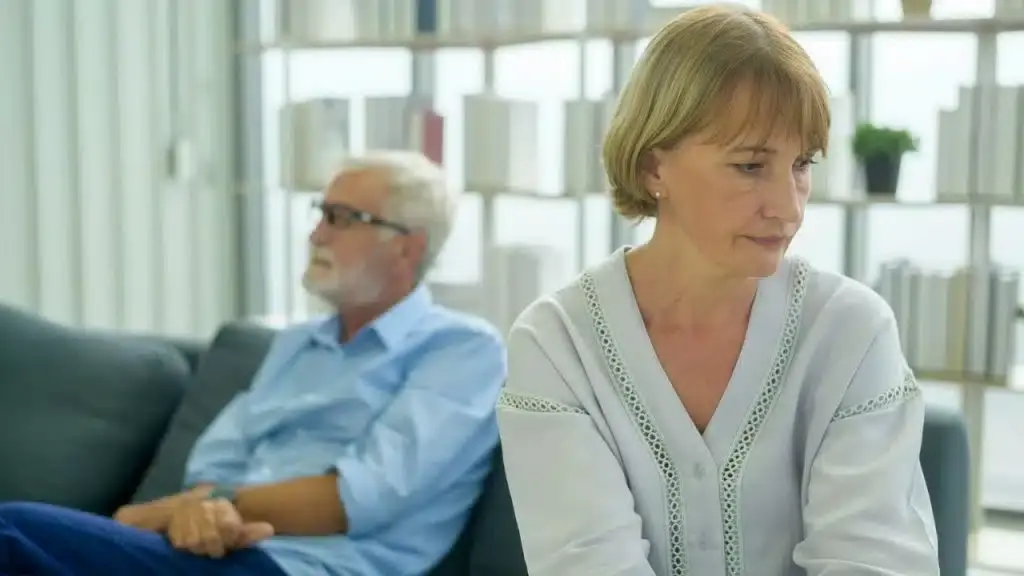
The difference between emotional distance and a relationship that cannot be repaired
Feeling disconnected does not automatically mean that a relationship is beyond repair.
A useful distinction is whether there is still some willingness to participate in rebuilding the relationship.
Signs that the relationship may need intentional rebuilding
- Conversations are almost entirely practical.
- You spend time together but rarely connect emotionally.
- You avoid difficult subjects because discussions always become arguments.
- You feel more like roommates than partners.
- You have stopped showing appreciation.
- You rarely experience affection or physical closeness.
- You no longer make plans for the future together.
- One or both partners feel chronically lonely within the relationship.
Loneliness is important to take seriously. The CDC notes that loneliness and social isolation are associated with increased risks involving mental and physical health, including depression, anxiety, cardiovascular disease, and other serious conditions.
How can couples grow close again after 50?
Rebuilding connection usually works better when couples focus on small, repeated changes rather than trying to solve decades of relationship problems in one conversation.
1. Start with curiosity instead of criticism
Instead of:
“You never care about me anymore.”
Try:
“I feel like we’ve become distant lately. I’d like to understand how you’ve been feeling about us.”
The second approach does not guarantee a positive response, but it creates more room for conversation.
The goal of the first conversation is not to determine who is right.
The goal is to understand what has changed.
2. Schedule connection—not just responsibilities
Many couples schedule:
- Doctor appointments
- Family events
- Financial meetings
- Travel
- Household tasks
But they do not schedule time for the relationship itself.
Consider creating a recurring couple connection period.
It could be:
- A 20-minute evening walk
- Coffee together on Saturday morning
- A weekly meal without phones
- A monthly day trip
- A shared exercise routine
- A regular date night
The activity itself is less important than creating predictable opportunities for connection.
The NIA specifically recommends staying connected through activities, communication, meaningful social interaction, and physical activity.
3. Rebuild friendship before trying to solve everything
Long-term romantic relationships contain several dimensions:
Partners + friends + family + household team + intimate relationship
When couples become distant, they often immediately focus on romance or sex.
Sometimes the better starting point is friendship.
Ask questions such as:
- What are you looking forward to this year?
- What has been difficult for you lately?
- Is there something you’ve always wanted to try?
- What do you miss about our earlier years?
- What would make the next five years meaningful for you?
- What would you like us to do differently?
These questions restore something that routine often removes: curiosity.
4. Create separate lives as well as a shared life
Growing closer does not require doing everything together.
In fact, maintaining individual interests can give partners more to share.
Each person can have:
- Their own friends
- Individual hobbies
- Exercise activities
- Personal goals
- Separate periods of quiet
- Professional or volunteer interests
The objective is not maximum togetherness.
It is healthy connection combined with healthy autonomy.
5. Replace “winning the argument” with solving the problem
After decades together, couples can become extremely skilled at remembering past mistakes.
That skill is rarely useful.
Instead of asking:
“Who started this?”
Ask:
“What pattern keeps happening between us?”
For example:
Old pattern:
One partner complains → the other becomes defensive → first partner becomes more critical → second partner withdraws.
New goal:
Identify the pattern → slow the conversation down → discuss one issue → identify one practical change.
This shifts the focus from blame to behavior.
A practical 30-day reconnection plan
Couples who want a concrete starting point can use a simple four-week framework.
Week 1: Reconnect
Spend 15–20 minutes together each day without television or phones.
Discuss your day rather than household logistics.
Ask:
“What has been on your mind lately?”
Week 2: Reintroduce shared experiences
Choose two activities that neither partner considers a chore.
Examples include:
- Walking
- Cooking
- Visiting a new restaurant
- Gardening
- Watching a favorite film
- Taking a short day trip
- Exercising together
The goal is to create new shared memories.
Week 3: Discuss the future
Talk about the next 5–10 years.
Discuss:
- Where you want to live
- Travel
- Money
- Health
- Family
- Retirement
- Work
- Friends
- Hobbies
- Lifestyle
This is particularly important after 50 because the future can look very different from the future you imagined at 30.
Week 4: Discuss the relationship itself
Ask each other:
- What do you appreciate about our relationship?
- What do you miss?
- What would you like more of?
- What would you like less of?
- What is one thing we could change together?
Each person should answer without interruption.
When should couples consider professional help?
Professional relationship counseling can be useful when couples repeatedly get stuck in the same communication cycle or cannot discuss important issues without escalation or withdrawal.
It may be particularly appropriate when there is:
- Persistent emotional disconnection
- Repeated unresolved conflict
- Major disagreements about retirement or finances
- Difficulty adjusting to an empty nest
- Sexual or intimacy concerns
- Caregiving stress
- Major life transitions
- Infidelity or significant breaches of trust
Individual mental-health support may also be appropriate when depression, anxiety, grief, or prolonged loneliness is affecting the relationship.
The NIA notes that social isolation and loneliness are associated with depression and other health concerns in older adults, and recommends discussing persistent loneliness or major life stresses with a health professional.
Importantly, relationship counseling is not only for couples who are considering separation.
Some couples use counseling as a structured way to improve communication before problems become more entrenched.
Don’t ignore hearing, sleep, and health problems
One overlooked contributor to relationship distance is untreated physical difficulty.
For example, hearing loss can make ordinary conversations exhausting. A partner may appear distracted or uninterested when they simply cannot hear clearly.
The NIA specifically notes that untreated hearing problems can contribute to reduced interaction, social isolation, and loneliness.
Similarly, chronic pain, poor sleep, medication effects, mobility problems, and other health changes can affect mood, energy, communication, and intimacy.
Therefore, rebuilding a relationship after 50 should not be viewed exclusively as a psychological project.
Physical health and relationship health often interact.
What couples should avoid
Some approaches can unintentionally increase emotional distance.
Avoid keeping score
Listing everything your partner has done wrong over the past 20 years rarely creates connection.
Avoid forcing immediate emotional disclosure
One partner may need more time before discussing difficult feelings.
Avoid treating every disagreement as a relationship crisis
Healthy couples can disagree.
The objective is not zero conflict. It is the ability to handle conflict without destroying emotional safety.
Avoid assuming your partner knows what you need
Long-term partners often believe they should automatically understand each other.
They do not.
People change.
Needs change.
Circumstances change.
Communication needs to change with them.
Avoid making the relationship your entire social world
Maintaining friendships, family relationships, community connections, and meaningful activities can support overall well-being. CDC guidance emphasizes that social connection involves a broader network than one relationship alone.
The deeper opportunity after 50: building a new relationship with the same person
One of the most important insights about long-term relationships is that couples do not necessarily need to recreate the relationship they had at 30.
They may need to build the next version of it.
At 30, connection may revolve around:
- Careers
- Children
- Building a home
- Financial goals
- Social activities
At 50 and beyond, couples may have different priorities:
- Health
- Freedom
- Travel
- Friendship
- Family relationships
- Personal growth
- Purpose
- Companionship
- Emotional intimacy
That means reconnecting is not necessarily about returning to the past.
It can be about creating a future that fits who both people have become.
FAQs

Is it normal for couples to grow apart after 50?
Emotional distance can occur during major life transitions, including retirement, children leaving home, caregiving, health changes, and changes in social networks. It is not inevitable, however, and couples can work intentionally on communication, shared activities, intimacy, and emotional connection.
Can a marriage become close again after years of emotional distance?
Yes, couples can work toward greater closeness by identifying recurring communication patterns, rebuilding friendship, creating shared experiences, discussing future goals, and seeking professional support when needed. The outcome varies from couple to couple.
Why does retirement sometimes create marital problems?
Retirement changes daily routines, personal identity, finances, social networks, household responsibilities, and the amount of time partners spend together. Research in older Korean adults found that the relationship between retirement and marital satisfaction differed by sex, demonstrating that partners can experience the transition differently.
Can loneliness happen inside a marriage?
Yes. Loneliness is a subjective feeling of disconnection and is not the same thing as simply being physically alone. A person can live with a spouse and still experience loneliness if the relationship does not provide the level of meaningful connection they need.
How often should couples spend quality time together?
There is no scientifically established universal number of hours that applies to every couple. Consistency and meaningful interaction are generally more useful goals than a specific number. Even short, regular periods of undistracted conversation can create opportunities for connection.
Final Takeaway
Couples often drift apart after 50 because life changes faster than the relationship adapts.
Retirement, an empty nest, health changes, caregiving, financial pressures, reduced social networks, and years of unresolved patterns can gradually turn an intimate relationship into a practical partnership.
But emotional distance is not necessarily permanent.
A useful starting point is surprisingly simple:
Talk less about what your partner is doing wrong and become curious about what has changed for both of you.
Then create regular opportunities to talk, spend time together, experience new activities, maintain individual interests, discuss the future, and address physical or emotional health problems when they interfere with connection.
Strong social relationships are associated with better physical and emotional well-being, and public-health organizations such as the CDC and National Institute on Aging emphasize the importance of meaningful social connection throughout later life.
After 50, the goal does not have to be returning to the relationship you had decades ago.
It can be something more realistic and meaningful:
learning how to know, support, and enjoy the person beside you again.
References
- Centers for Disease Control and Prevention (CDC) — Health Effects of Social Isolation and Loneliness
Provides evidence on the relationship between social connection, loneliness, and physical and mental health outcomes.
CDC — Health Effects of Social Isolation and Loneliness - National Institute on Aging — Depression and Older Adults
Provides information about depression risk factors in later life, including major life events, caregiver stress, sleep problems, loneliness, social isolation, and reduced physical activity.
NIA — Depression and Older Adults