



Managing neck wrinkles for middle-aged women requires consistent sun protection, moisturization, and carefully introduced retinoids. Healthy nutrition, avoiding smoking, maintaining a stable weight, and improving prolonged neck posture can also support skin health. Deeper wrinkles or significant neck laxity may require professional dermatological or aesthetic treatments.
WomanlyZine.com
Neck wrinkles are common in middle age, but they are not caused by aging alone. Sun exposure, collagen and elastin loss, reduced skin hydration, repetitive neck movement, and—especially around and after menopause—hormonal changes can all contribute to horizontal neck lines, crepey skin, and loss of firmness. The most effective approach is therefore not a single “neck wrinkle cream,” but a consistent combination of daily UV protection, appropriate retinoid use, moisturization, healthy lifestyle habits, and professional treatment when structural changes become more pronounced.
For women in their 40s, 50s, and beyond, prevention and early treatment are particularly important. Research supports topical retinoids for photoaging, while studies of menopausal skin show that declining estrogen is associated with changes in collagen, elasticity, hydration, and skin thickness.
Table of Contents
What Causes Neck Wrinkles in Middle Age?

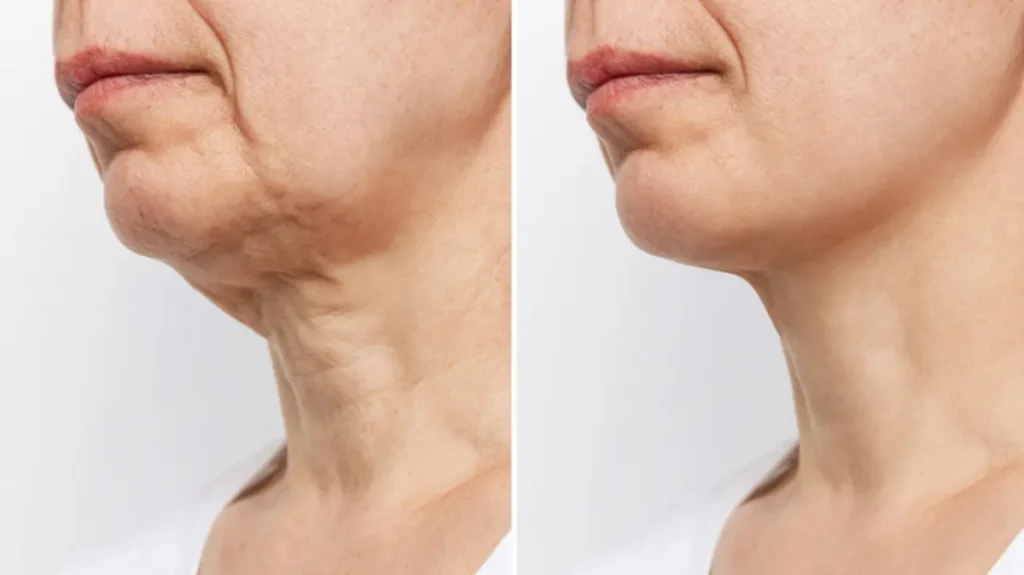
The neck is often treated differently from the face, even though it is exposed to many of the same aging processes. In fact, the neck can reveal cumulative sun exposure and loss of skin elasticity quite clearly.
Several factors usually work together.
1. Natural collagen loss
Collagen provides structural support for the skin. As we age, collagen production decreases and existing collagen becomes progressively altered.
The result can be:
- Fine horizontal lines
- Reduced firmness
- Thinner-looking skin
- Crepey texture
- Increased laxity
Skin aging is a multifactorial process involving the epidermis, dermis and underlying tissue, with collagen loss being an important component.
2. Sun exposure and photoaging
UV radiation accelerates the breakdown of collagen and contributes to changes in pigmentation, texture and elasticity.
This is why a woman who carefully applies sunscreen to her face but stops at the jawline may still develop noticeable aging on the neck and upper chest.
A practical rule: If a skincare product is being applied to the face in the morning, sunscreen should generally extend down the front and sides of the neck and onto exposed upper chest skin.
3. Menopause and declining estrogen
Hormonal changes become particularly relevant during perimenopause and menopause.
Research has associated estrogen deficiency with reduced collagen, thinner skin, reduced elasticity, dryness and increased wrinkling.
A 2024 systematic review and meta-analysis also found that menopausal hormone therapy was associated with improvements in measures including skin elasticity, thickness and collagen content, although the researchers emphasized the need for additional well-designed trials.
This does not mean hormone therapy should be started specifically to treat neck wrinkles. Menopausal hormone therapy has broader medical indications, contraindications and risks that should be discussed with an appropriate healthcare professional.
4. Repetitive neck movement
The neck bends, rotates and stretches thousands of times throughout daily life. Looking down at phones, reading, working at a computer and sleeping in certain positions may repeatedly fold the skin.
These movements can contribute to the visibility of existing horizontal lines, although they are only one factor among many.
It is therefore more useful to think of “tech neck” as a contributing mechanical factor rather than the sole explanation for neck aging.
What Do Neck Wrinkles Look Like at Different Stages?
Neck aging does not progress identically in every woman, but a practical way to understand it is to divide visible changes into three broad stages.
| Stage | Typical appearance | Main focus |
|---|---|---|
| Early | Fine horizontal lines, mild dryness | Prevention and hydration |
| Moderate | Deeper lines, uneven texture, mild laxity | Retinoids + UV protection + professional assessment |
| Advanced | Prominent folds, crepey skin, significant laxity | Combination medical/aesthetic approaches |
The important distinction is between surface wrinkles and structural laxity.
A moisturizer may make dry, finely lined skin look smoother. A retinoid can improve photoaging over time. But significant loose skin involves deeper structural changes that topical skincare alone may not completely correct.
The Most Important Step: Protect the Neck From UV Radiation
If there is one habit to prioritize, it is consistent sun protection.
Use a broad-spectrum sunscreen of SPF 30 or higher on exposed neck skin every morning. Apply enough to cover the entire exposed area rather than stopping at the jawline.
For outdoor activities, additional protection can include:
- A wide-brimmed hat
- UPF clothing
- Seeking shade
- Reapplying sunscreen after prolonged outdoor exposure or sweating
UV protection is particularly important because anti-aging treatments cannot fully compensate for continued photo-damage.
A common mistake
Many people have a sophisticated facial skincare routine but use no sunscreen on the neck.
This creates a mismatch:
Face: cleanser → antioxidant → moisturizer → sunscreen
Neck: nothing
Over years, that difference can become visually apparent.
Can Retinol or Retinoids Help Neck Wrinkles?
Yes, retinoids are among the best-supported topical ingredients for photoaging, but the neck requires a more cautious approach than some facial areas because it can be relatively sensitive.
Retinol is available in many cosmetic products, while tretinoin is a prescription retinoid with stronger clinical evidence for photoaging.
A systematic review of randomized controlled trials found that topical tretinoin consistently improved clinical signs of photoaging, including wrinkling and pigmentation.
A more recent meta-analysis of randomized trials also found significant improvements in fine and coarse facial wrinkles associated with photodamage.
Importantly, there is also evidence specifically involving the neck. A clinical study of a retinol-containing topical treatment reported significant improvements in multiple signs of neck aging, including fine lines, wrinkles, crepiness, laxity and texture after approximately 12–16 weeks.
How to Introduce a Retinoid to the Neck
For someone new to retinoids, a conservative approach is sensible:
- Apply a small amount to completely dry skin.
- Start a few nights per week rather than every night.
- Use moisturizer to support the skin barrier.
- Increase frequency gradually if tolerated.
- Use sunscreen consistently during the day.
Potential reactions include:
- Dryness
- Redness
- Peeling
- Burning or stinging
- Increased irritation from other active ingredients
More is not necessarily better. Excessive irritation can compromise the skin barrier and make the neck look temporarily worse.
Pregnancy is an important exception: topical retinoids should generally be avoided during pregnancy, and anyone who is pregnant, trying to conceive, or breastfeeding should discuss appropriate skincare with their clinician.
Don’t Forget Moisturization
Hydration does not rebuild lost collagen, but it can significantly improve the appearance and feel of dry, finely wrinkled skin.
Look for moisturizers containing ingredients such as:
- Ceramides
- Glycerin
- Hyaluronic acid
- Panthenol
- Squalane
- Other barrier-supporting ingredients
A useful evening routine can be as simple as:
Cleanser → retinoid → moisturizer
For sensitive skin, another option is:
Moisturizer → retinoid → moisturizer
This “sandwich” approach can reduce irritation for some people.
What About Vitamin C?
Vitamin C can be a useful addition to a morning routine, particularly when the goal is to address photoaging and oxidative stress.
A simple routine might be:
Morning
- Gentle cleanser
- Vitamin C serum, if tolerated
- Moisturizer
- Broad-spectrum SPF 30+
Evening
- Gentle cleanser
- Retinoid
- Moisturizer
However, skincare does not need to contain a dozen active ingredients to be effective.
Consistency generally matters more than having an extremely complicated routine.
Lifestyle Habits That Can Help Protect Neck Skin
Skincare is only one part of the picture.
1. Don’t smoke
Smoking is associated with accelerated skin aging and impaired tissue repair. Avoiding tobacco is therefore relevant not only to general health but also to long-term skin quality.
2. Maintain a stable, healthy body weight
Large fluctuations in body weight can change the appearance of the neck and jawline because the amount and distribution of subcutaneous tissue changes.
This does not mean that weight loss automatically eliminates neck wrinkles. If substantial skin laxity is already present, losing weight may sometimes make loose skin more apparent.
The goal should therefore be sustainable weight management, rather than rapid dieting for cosmetic reasons.
3. Eat a nutrient-dense diet
Skin requires adequate protein, essential fatty acids, vitamins and minerals for normal maintenance and repair.
A practical diet includes:
- Fish
- Eggs
- Lean proteins
- Beans and legumes
- Vegetables
- Fruits
- Nuts and seeds
- Whole grains
No particular food can erase neck wrinkles. Be cautious of supplements marketed as a guaranteed “collagen replacement” or anti-aging solution.
Research into oral nutritional interventions continues, but evidence varies considerably between products and formulations. A 2026 review, for example, describes several nutritional compounds as promising but emphasizes the developing nature of the evidence.
4. Sleep adequately
Poor sleep does not directly create a specific type of neck wrinkle, but consistently inadequate sleep can negatively affect overall skin health and recovery.
A regular sleep schedule is therefore a sensible part of a broader healthy-aging strategy.
5. Manage chronic stress
Stress management should not be viewed as a cosmetic treatment by itself. However, chronic stress can influence sleep, lifestyle behaviors and overall health, all of which can indirectly affect skin quality.
Does Looking Down at Your Phone Cause Neck Wrinkles?
The answer is more nuanced than many “tech neck” headlines suggest.
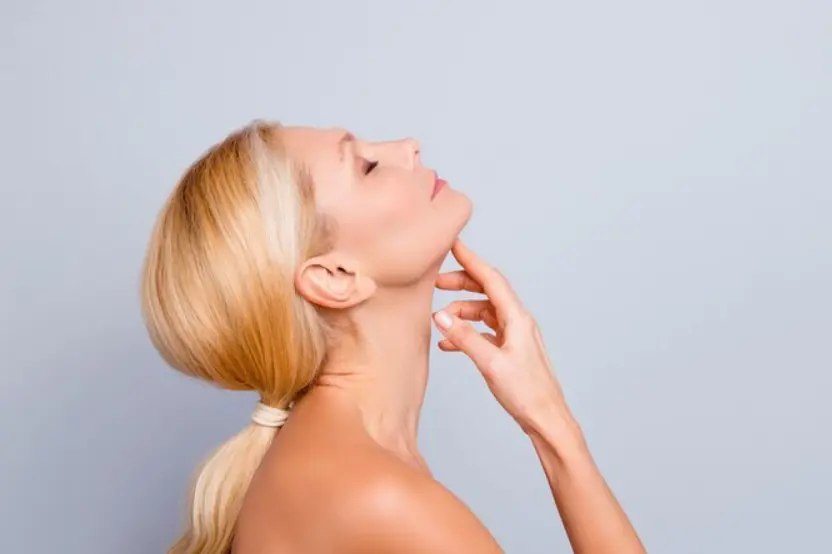
Repeated neck flexion can temporarily create folds in the skin, and repeated mechanical movement may contribute to the appearance of existing horizontal lines. But aging, cumulative UV exposure, collagen loss, hormonal changes and genetics are major contributors.
Therefore, the practical solution is not to stop using your phone.
Instead:
- Raise the phone closer to eye level.
- Take regular screen breaks.
- Adjust your monitor height.
- Avoid maintaining the neck in a sharply flexed position for long periods.
These changes can also reduce neck and shoulder strain.
When Skincare Isn’t Enough
A woman may follow an excellent skincare routine and still have visible neck wrinkles.
That is because different problems require different approaches.
Fine lines and surface texture
Topical retinoids, moisturization and sun protection may provide meaningful improvement over time.
Crepey skin
Skin-quality treatments may be considered when topical skincare is insufficient.
Significant laxity
When the primary problem is loose skin rather than superficial wrinkles, topical products have limitations.
Depending on the individual, dermatologists or qualified aesthetic physicians may discuss options such as:
- Radiofrequency-based treatments
- Ultrasound-based skin tightening
- Fractional laser treatments
- Injectable treatments in selected cases
- Surgical neck rejuvenation for substantial structural laxity
The appropriate treatment depends on skin thickness, pigmentation, degree of laxity, anatomy, medical history and treatment goals.
There is no single procedure that is appropriate for every middle-aged woman.
What About Menopausal Hormone Therapy for Neck Aging?
This deserves special attention because menopause can substantially change skin physiology.
Evidence suggests that menopausal hormone therapy can influence collagen, elasticity and skin thickness.
However, MHT should not be considered simply an anti-wrinkle treatment.
The decision involves factors such as:
- Menopausal symptoms
- Age
- Time since menopause
- Personal medical history
- Cardiovascular risk
- Breast and endometrial health
- Type and route of hormone therapy
A clinician should evaluate these factors before treatment.
Similarly, topical estrogen products marketed specifically for cosmetic skin rejuvenation should not be assumed to have the same evidence or safety profile as established dermatological treatments. A 2026 systematic review noted that evidence regarding topical estrogen for skin aging remains an area requiring careful evaluation.
A Practical 12-Week Neck-Wrinkle Routine
For a woman who wants a straightforward starting point, the following framework is more realistic than an extensive 10-step routine.
Weeks 1–2: Build the foundation
Morning
- Gentle cleanser
- Moisturizer
- SPF 30+ on face, neck and exposed chest
Evening
- Gentle cleanser
- Moisturizer
The goal is to establish tolerance and repair any existing dryness.
Weeks 3–6: Introduce a retinoid
Add a low-frequency retinol or clinician-recommended retinoid at night.
Start gradually rather than applying it every night immediately.
Continue daily sunscreen.
Weeks 7–12: Evaluate the response
Look for:
- Smoother texture
- Less visible fine lines
- Improved hydration
- More even appearance
- Reduced roughness
Do not expect dramatic transformation after a few days.
Retinoid studies typically evaluate outcomes over weeks to months, not overnight. Clinical research on tretinoin has demonstrated improvements over longer treatment periods, while neck-specific retinol research has documented measurable changes around 12–16 weeks.
Common Mistakes That Can Make Neck Wrinkles More Noticeable
Mistake 1: Using facial skincare but ignoring the neck
The neck should be included in the same basic anti-aging strategy.
Mistake 2: Applying too much retinol
Irritation is not evidence that a product is working better.
Mistake 3: Skipping sunscreen on cloudy days
UV exposure does not disappear simply because the weather is overcast.
Mistake 4: Expecting moisturizer to tighten loose skin
Moisturizers improve hydration and surface appearance. They cannot reproduce the structural effect of a medical skin-tightening procedure or surgery.
Mistake 5: Chasing every new anti-aging ingredient
Evidence should matter more than marketing language.
Neck Wrinkles: What Actually Makes the Biggest Difference?
For middle-aged women, the most practical strategy is to think in layers:
1. Prevent additional damage
Daily broad-spectrum sunscreen is foundational.
2. Improve skin quality
Retinoids, moisturizers and selected antioxidants can address photoaging and texture.
3. Protect the skin barrier
Avoid excessive exfoliation and aggressive combinations of active ingredients.
4. Address lifestyle factors
Avoid smoking, maintain healthy nutrition and body weight, sleep adequately, and reduce prolonged poor neck posture.
5. Treat structural aging when necessary
If laxity or deep folds dominate, professional assessment may be more appropriate than adding more skincare products.
FAQs
Can neck wrinkles really be reduced?
Yes. Fine lines and photoaging can often be improved, particularly with consistent sunscreen and evidence-supported topical treatments such as retinoids. Deeper wrinkles and significant laxity are more difficult to correct with skincare alone.
Is retinol safe for the neck?
It can be, but neck skin may be sensitive. Start gradually and moisturize. Persistent burning, redness or peeling is a reason to reduce frequency or seek professional advice.
How long does retinol take to improve neck wrinkles?
Think in terms of weeks to months rather than days. A neck-specific clinical study reported significant improvements after approximately 12–16 weeks of retinol-containing treatment.
Does sunscreen prevent neck wrinkles?
Consistent UV protection helps reduce cumulative photoaging, which is an important contributor to wrinkles and loss of skin quality.
Does menopause make neck wrinkles worse?
Menopause-associated estrogen decline is linked with changes including reduced collagen, skin thickness and elasticity and increased dryness and wrinkling.
Bottom Line
The best way to manage neck wrinkles in middle-aged women is a long-term combination of UV protection, gradual retinoid use, moisturization and healthy lifestyle habits. Menopause can accelerate changes in collagen, elasticity, hydration and skin thickness, so expectations and treatment strategies may need to change during this stage of life.
Skincare can substantially improve surface texture, fine lines and photoaging, but it has limitations when the main problem is significant skin laxity. In those cases, consultation with a board-certified dermatologist or appropriately qualified medical professional can help distinguish wrinkles from deeper structural changes and determine whether a procedural treatment is appropriate.
The key is consistency: protect the neck every morning, treat it gently at night, introduce active ingredients gradually, and evaluate results over months rather than days.
References
- tohang, I. B. S., et al. (2022). Topical tretinoin for treating photoaging: A systematic review of randomized controlled trials. International Journal of Women’s Dermatology. PubMed
- Photoaging and tretinoin. PubMed. Background review of the mechanisms and clinical evidence for topical tretinoin in photoaged skin. PubMed