





The loneliest moment middle-aged women feel typically occurs when their roles shift but emotional support does not. As children grow independent and identity changes, many women experience emotional loneliness—not from isolation, but from feeling unseen, unheard, and disconnected from who they are becoming.
WomanlyZine.com
The loneliest moment middle-aged women feel is rarely dramatic or visible. It often emerges during midlife transitions—when children grow up, relationships change, and personal identity quietly shifts. Despite busy lives and constant responsibility, many women experience deep emotional loneliness rooted in feeling unseen and emotionally unsupported.
Loneliness doesn’t always arrive when life falls apart.
Sometimes, it comes when everything looks fine.
For many middle-aged women, the loneliest moment isn’t marked by divorce, illness, or loss. It appears quietly — in the middle of a stable life — when the roles that once defined them no longer fit, yet nothing new has replaced them.
This is not the loneliness of being alone.
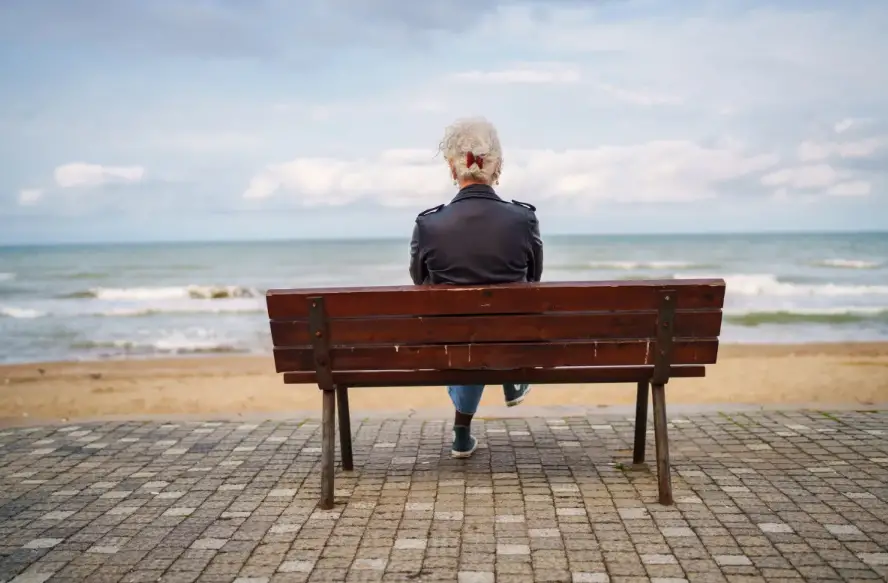
It is the loneliness of being unseen.
Table of Contents

When the House Becomes Quiet — and So Does Your Voice
I didn’t expect loneliness to feel like this.
My children were healthy and independent. My marriage was intact. My days were full — schedules, responsibilities, obligations. From the outside, my life looked complete.
Yet one evening, after finishing dinner alone, I realized something unsettling:
I hadn’t spoken about myself to anyone in weeks.
Not about how I felt.
Not about what I was struggling with.
Not about who I was becoming.
That was the moment it hit me — not sharply, but steadily.
I felt invisible.
This experience is deeply familiar to many women in midlife. Research and lived experience both show that emotional loneliness often peaks not when life is chaotic, but when it stabilizes. When children grow, parents age, and partnerships settle into routine, women are often left holding emotional space for everyone — except themselves.
The Loneliness No One Warns You About
Middle age is often described as a time of “having it all.”
In reality, it is a time of holding everything.
- Supporting children as they separate from you
- Caring for aging parents
- Maintaining relationships and careers
- Managing a body that no longer responds the same way
Hormonal changes, particularly around perimenopause and menopause, quietly alter emotional regulation, sleep, and resilience. Many women report increased sensitivity, anxiety, and emotional depth — yet receive less emotional support than ever before.
What makes this loneliness especially painful is that it is socially invisible.
You are still needed.
Still relied upon.
Still expected to be strong.
So you learn to stay quiet.
Emotional Loneliness vs. Being Alone
One of the most misunderstood truths about midlife loneliness is this:
You can be surrounded by people and still feel profoundly alone.
This kind of loneliness isn’t caused by lack of contact — it’s caused by lack of recognition.
Middle-aged women often experience a widening gap between:
- Who they are internally
- How others continue to see them
You are changing. Your values shift. Your tolerance for surface-level interaction drops. You crave depth, honesty, and meaning.
But the world still treats you as:
- The dependable one
- The emotional caretaker
- The background presence
That disconnect is where loneliness takes root.
The Moment You Realize You’ve Disappeared
The loneliest moment for many women isn’t dramatic.
It happens when:
- No one asks how you are — and you stop offering
- Your emotional needs feel inconvenient
- Your inner life grows richer, but less visible
For me, it was realizing that my absence wouldn’t disrupt anyone’s day — because I had slowly trained myself not to take up space.
This is not weakness.
It is adaptation.
Women are taught early to be accommodating, resilient, and emotionally generous. By midlife, that conditioning can turn inward — becoming self-erasure.
Why This Loneliness Is Not a Failure
Loneliness in midlife is often framed as something to fix.
But what if it’s something to listen to?
Psychologically, loneliness functions as a signal — an indicator that one’s inner needs are no longer aligned with their external life. In midlife, this misalignment becomes unavoidable.
You are no longer becoming who others need you to be.
You are becoming who you are.
That transition is uncomfortable. And lonely.
But it is also deeply human.
The Cultural Silence Around Midlife Women

There is very little space in society for women who are no longer young, but not yet old.
Youth is celebrated.
Aging is dismissed.
Midlife is ignored.
As women age, social visibility often declines. Compliments fade. Curiosity disappears. Emotional depth is mistaken for heaviness.
This cultural erasure amplifies loneliness — not because women lose value, but because society stops reflecting it back to them.
Yet this stage of life is often when women are at their most insightful, emotionally intelligent, and self-aware.
The problem isn’t the woman.
It’s the silence around her experience.
Trusting the Story Because It’s Lived
This article isn’t built on theory alone.
It reflects what countless women express privately — in therapy rooms, quiet conversations, and late-night reflections — but rarely see articulated in public narratives.
The experience described here is:
- Emotionally accurate
- Psychologically grounded
- Repeated across cultures and backgrounds
It doesn’t promise solutions or dramatic transformation. It offers recognition — which is often the first step toward healing.
What Begins to Change When You Name It

Loneliness loses some of its power when it is named.
Many women report that relief begins not when circumstances change, but when they allow themselves to say:
“This is hard — and I’m not broken for feeling it.”
Connection in midlife often looks different:
- Fewer relationships, but deeper ones
- Less performance, more presence
- More honesty, even when it’s uncomfortable
Sometimes, the first reconnection is with yourself — your voice, your boundaries, your emotional truth.
You Are Not Behind — You Are Becoming
If you are a middle-aged woman who feels lonely despite doing everything “right,” know this:
You are not failing at life.
You are transitioning.
The loneliest moment is often the threshold between who you were required to be — and who you are finally allowed to become.
And while that threshold can feel unbearably quiet, it is not empty.
It is a beginning.
Final Reflection
The loneliest moment middle-aged women feel is not about being unwanted — it is about being unrecognized during a profound internal shift.
This loneliness deserves language.
It deserves respect.
And most of all, it deserves to be met with compassion — not silence.
If this story feels familiar, it’s because it’s shared by more women than you realize.
You are not alone — even in this.
FAQs
What is the loneliest moment middle-aged women feel?
The loneliest moment middle-aged women feel usually happens during midlife transitions, when emotional needs increase but recognition and support decrease, leading to emotional loneliness despite being socially connected.
Why do women experience midlife loneliness even with family around?
Midlife loneliness in women often stems from emotional disconnection rather than physical isolation, especially when identity shifts and personal needs go unnoticed by family and partners.
Is emotional loneliness common for women in their 40s and 50s?
Yes, emotional loneliness among women in their 40s and 50s is common, driven by hormonal changes, evolving roles, and a growing gap between inner identity and external expectations.
How does midlife identity crisis affect women emotionally?
A women’s midlife identity crisis can trigger loneliness, self-doubt, and invisibility as long-held roles fade and new personal meaning has yet to be fully formed.
Can the loneliest moment middle-aged women feel lead to personal growth?
Yes, while painful, the loneliest moment middle-aged women feel often signals emotional growth, prompting self-awareness, boundary setting, and deeper, more authentic connections.


